Kunal
Year-round
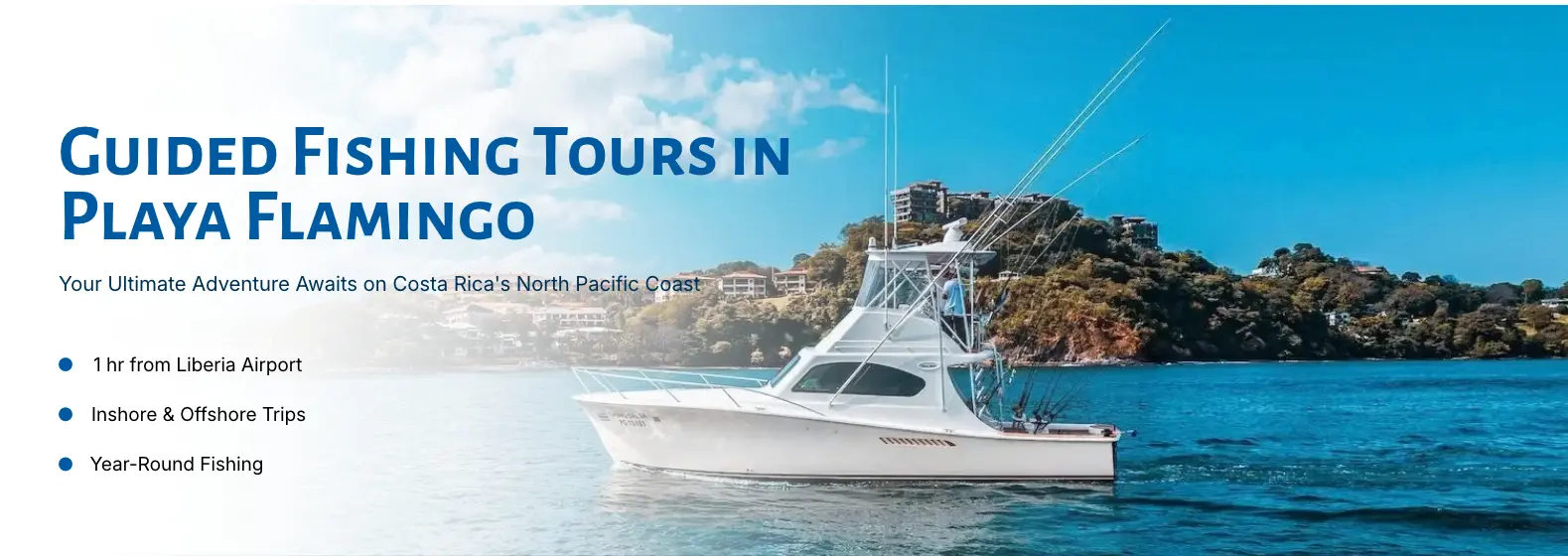
Costa Rica fishing is famous for one big reason: variety. Along the Pacific coast, you can spend a morning on calm inshore water hooking roosterfish and snapper, or run offshore in search of sailfish, marlin and tuna. In Playa Flamingo, you don’t have to choose. The reef and the deep blue are both a short run from the marina, allowing you to cast for roosterfish and chase sailfish on the same day, just an hour from Liberia International Airport.
Fishing is part of Flamingo’s story year-round.
Flamingo fishing in 30 seconds
-
- Where: Marina Flamingo, Guanacaste, on Costa Rica’s north Pacific coast (about 1 hour from Liberia airport)
- Inshore Trips: about 4 hours, lots of action, great for guests short on time
- Offshore Trips: 6–8 hours exploring deeper water for big Game fish.
Quick Trip Planner

If you dream of catching a billfish
Choose a full-day offshore trip so the crew has time to explore different fishing areas.

If your group wants a little of everything
Ask about a trip that combines inshore fishing with time farther from the coast.

If you’re traveling with children
Share their ages and interests so the crew can recommend the right trip length and fishing plan.
All About Playa Flamingo Fishing
A fishing town with a comeback story
To understand why Playa Flamingo means so much to sportfishing in Costa Rica, it helps to look beyond the marina you see today. Flamingo had one of the country’s earliest fishing marinas and was home to what a former operator described as Costa Rica’s first full-service marina. By the 1990s, anglers were coming here to pursue billfish and test their skills in the Pacific waters off Guanacaste.
The town’s fishing history includes two extraordinary catches. In 1992, Deborah Dunaway landed a 102-pound Pacific sailfish on 2-pound-test line. The following year, Jerry Dunaway landed a 111-pound Pacific sailfish in the same line class. Imagine trying to bring a fish weighing more than 100 pounds alongside the boat on line rated for just two pounds. It takes skill from the angler and close coordination with the captain and crew.
Those catches became part of the history that put this small coastal town on the sportfishing map. Today, they offer a glimpse of the skill, ambition, and memorable days on the water that have long drawn anglers to Flamingo.
A new chapter for Flamingo fishing.
After the original marina closed in 2003, Flamingo’s fishing community continued operating from the bay. As other Pacific coast marinas developed, the town’s connection to sportfishing remained, carried forward by local captains and crews.
The new Marina Flamingo partially opened in June 2022 to host an international light-tackle tournament. Over four days, 57 anglers released 191 sailfish and six blue marlin. The tournament brought experienced light-tackle anglers together across multiple boats and marked a memorable opening chapter for the new marina. For Flamingo, it was a chance to celebrate both its fishing history and its future.
Marina Flamingo held its public inauguration in February 2023 and now lists 92 wet slips. For visitors, the most immediate benefit is straightforward: the marina gives a clear starting point for both inshore and offshore trips. When your charter departs from a marina slip, you can meet the crew at the dock and step directly aboard. It is a welcoming start to the day, especially when you are arriving with family and everything you want to bring along.
Where does your charter board?
Fishing charters in Playa Flamingo may board at Marina Flamingo or depart from a nearby beach location. Your operator can tell you exactly where to meet, how boarding works, and when to arrive, so the start of your trip is easy to plan. Some boats still anchor out in the bay, and guests are ferried out on a smaller boat or panga, then climb aboard the charter boat on the open water. Sometimes that means wading out from the beach first. For confident, able-bodied adults, that can be part of the adventure.
Chino Salsa departs from Slip E-4 at the Marina Flamingo charter dock. You can board directly from the marina, settle in with your group, and let the crew guide the fishing day from there.
Why choose Playa Flamingo for fishing?
The scenery and wildlife. Even before the first line goes in, the view is part of the value: rocky headlands, blue water, and frequent wildlife sightings. Depending on the season, you might spot dolphins, sea turtles, manta rays, and seabirds working bait schools (often a good sign for fishing).
The balance of comfort and access. Guanacaste has several launch points, including Tamarindo and Playas del Coco, but Flamingo stands out for its balance. You’re close to beach towns, resorts, and restaurants, while still within reach of serious offshore water. Potrero, Brasilito, Playa Conchal, and Tamarindo are all nearby, so you can plan a fishing day without changing hotels.
Inshore vs offshore fishing: which trip is right for you?
Every Flamingo charter starts with one choice: stay close to the coast, or head out to deep water.
| Inshore (half day) | Offshore (full day) | |
|---|---|---|
| Trip length | About 4 hours | 6–8 hours |
| Where you fish | Rocky points, nearshore structure | Deep blue water well offshore |
| Main species | Roosterfish, snapper, grouper, jacks, mackerel | Sailfish, marlin, dorado, yellowfin tuna, wahoo |
| Pace | Short runs and plenty of hands-on fishing | More time exploring deeper fishing grounds |
| Best for | Guests short on time | Billfish goals, families, and groups seeking an offshore adventure |
Half-day inshore trips put you close to Flamingo’s rocky points, and coastal scenery. With a variety of species to pursue, they are an engaging introduction to fishing for first-timers and families.
Full-day offshore trips give the crew more time to explore the deeper waters where sailfish, marlin, tuna, and dorado are found. The longer trip creates room to try different fishing areas and techniques, making it a natural choice when offshore species are your priority.
Not sure? Tell the captain which species excite you most, who is joining you, and how you would like to spend the day.
Best time to fish in Playa Flamingo
Playa Flamingo fishes well year-round, but each species keeps its own calendar. Offshore species move with changing conditions, while inshore targets such as roosterfish, snapper, and jacks give anglers options throughout the year.
If sailfish are at the top of your list, December through April is the planning window. May through November is a strong period to ask about marlin and yellowfin tuna, while June through December brings good opportunities for dorado, also called mahi-mahi. These are useful starting points, but fish do not follow a calendar exactly. Your captain’s recent reports will tell you more about what is happening off Flamingo during your visit.
Dry season: December to April
Dry season is one of the most popular times to visit this beautiful tropical destination. Days are typically sunny, the surrounding beaches are at their most inviting, and a fishing trip fits easily into a vacation filled with swimming, dining, and exploring the coast.
This is the season to ask about sailfish if catching one is high on your list. Marlin, tuna, and dorado may also be part of the picture. For an inshore adventure, head along Flamingo’s rocky coastline in search of roosterfish. They can be targeted year-round, but Chino Salsa’s crew sees the strongest local action from November through early May.
Green season: May to November
Green season brings a different kind of beauty to Flamingo. The hills turn lush, the coastline feels vibrant, and the fishing calendar opens up strong opportunities for marlin, yellowfin tuna, and dorado.
Fishing seasons give you a starting point. Closer to your trip, ask the crew what they have been catching around Flamingo and which outing best matches your interests.
Fish species you can catch in Playa Flamingo

Sailfish
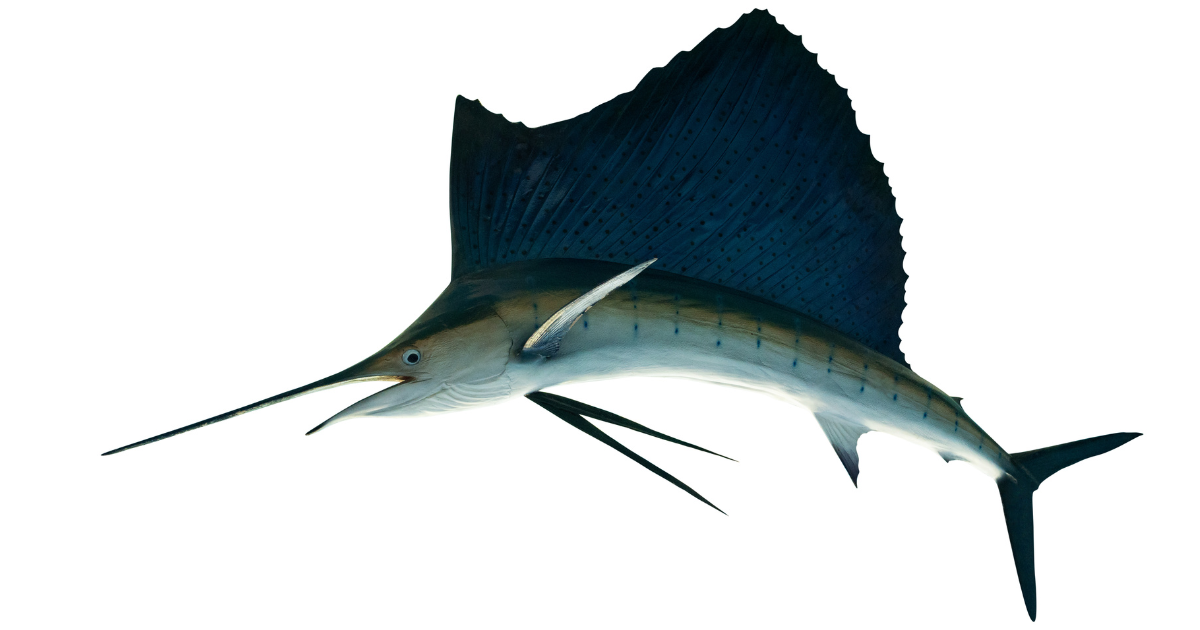
Sailfish are one of the great offshore sights in Costa Rica. Fast and acrobatic, they can put on a remarkable display when hooked. May through August is the strongest local window to plan a trip around sailfish, although they can be encountered in other months. The crew chooses where and how to fish based on the activity they see offshore, and sailfish are released after the catch.
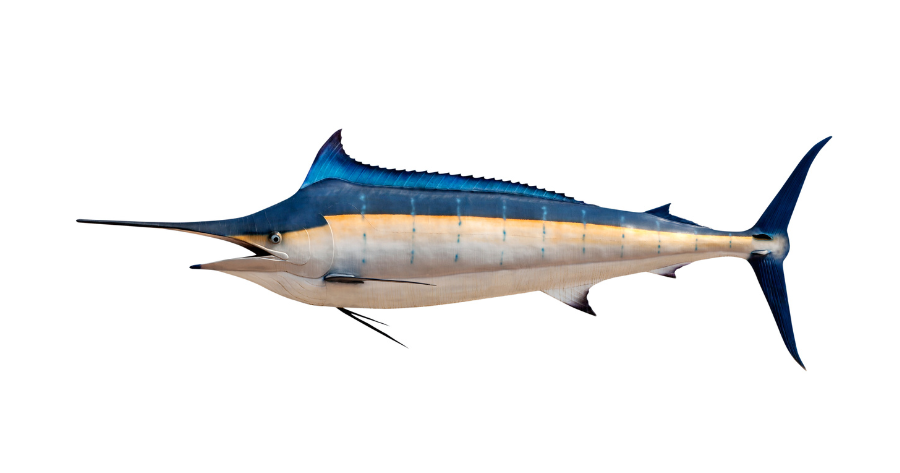
Marlin
Catching a marlin is a bucket-list goal for many offshore anglers, and the waters off Flamingo offer opportunities to pursue more than one species. Blue marlin are a notable target from November into early March, with another period of activity during the summer. Black marlin are often pursued from May through November. A full-day trip gives the captain time to explore the offshore grounds, follow signs of feeding fish, and tailor the approach to the species present during your visit.
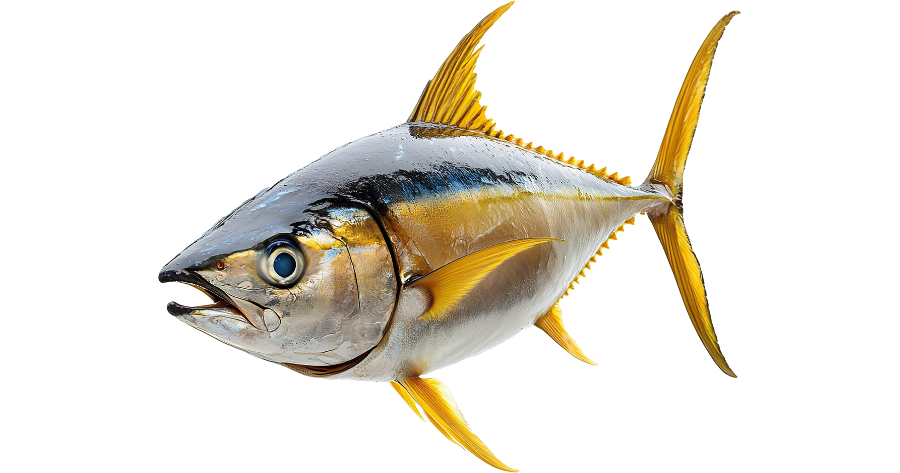
Yellowfin tuna
Yellowfin tuna are strong, fast, and one of the most popular catches to enjoy for dinner. They can be found off Flamingo throughout the year, with August through October often bringing the most consistent action. When tuna gather around bait schools, the crew may spot feeding birds or surface activity and head toward the action. If you keep a tuna, ask the crew about having some of the catch prepared at a local restaurant.
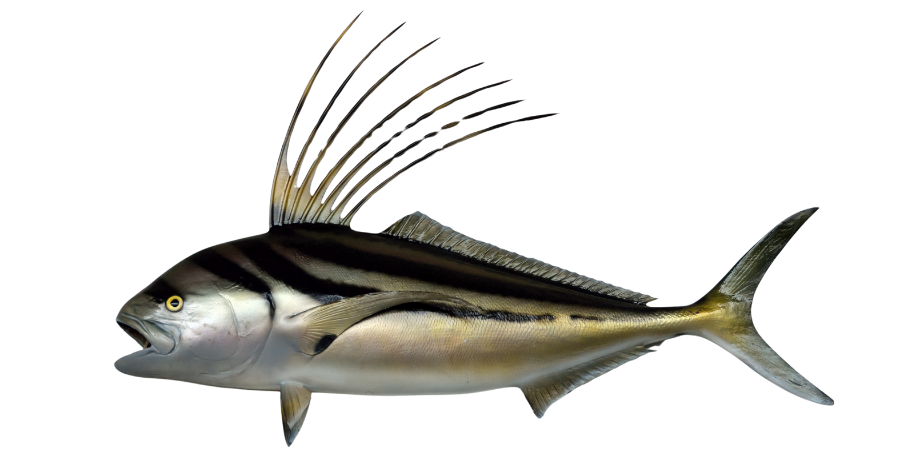
Roosterfish
Roosterfish are Flamingo's signature inshore catch, found year-round near rocky points and bait-rich shoreline. Their tall, comb-like dorsal fin is unmistakable, and they put up a tough fight. You can target them throughout the year, but our crew sees its strongest local action from November through early May.
Other popular catches
Mahi-mahi (dorado): Colorful, aggressive, and a favorite for many anglers. Late May through October is a particularly good window around Flamingo, and dorado are a favorite to bring back for dinner.
Wahoo: Speedy offshore predators that give anglers an exciting fight. May through August is a useful planning window.
Snapper and grouper: Year-round options around reefs and rocky areas, offering an enjoyable way to explore Flamingo’s inshore fishing grounds.
Jack crevalle and mackerel: Lively inshore and nearshore catches that can add plenty of action to a day on the water.
Finding the right charter for your group
Not all fishing trips in Costa Rica are the same. The best match depends on people, goals, and comfort, not just the boat photo on a website.
First-time anglers: Choose a crew that enjoys teaching. A good guide will show you how to hold the rod, reel in a fish, and enjoy each part of the experience. You can arrive ready to learn; the crew will help with the rest.
Families with children: Look for a trip length that suits your family, along with shade, comfortable seating, and child-sized life jackets. A shorter inshore charter can give children plenty to see and do, from watching the coastline to taking turns at the rod. Let the crew know your children’s ages so they can shape the day around them.
Experienced sportfishing anglers: Share the species you want to target and ask about the crew’s approach to trolling, live bait, teasers, and fishing different areas. If you have preferences (certain lures, circle hooks, fly gear), mention them early. A good captain will talk strategy.
Groups with non-fishing companions: Consider a shorter inshore trip or a scenic-plus-fishing plan, then spend the afternoon at the beach. Check that the boat has comfortable seating and shade for non-anglers.
Questions to ask before you book
- Where do we meet and board?
- How many anglers can fish at once?
- Which trip would you recommend for our dates and target species?
- What time should we arrive?
- What is included in the trip price?
- What amenities does the boat have?
- How does the crew handle catch and release?
- What booking terms should we know before reserving?
When comparing boats that seem similar, the difference often comes down to comfort and crew. Charters range from modern sportfishing boats (more shade, often a bathroom, a smoother ride) to smaller center-console boats (nimble and often great for inshore). Look at shade, an air-conditioned cabin and salon, a bathroom, ride quality, equipment condition, and how well the crew supports beginners.
What to expect on the day
If you’ve never been on a fishing charter before, here’s how a typical day in Flamingo unfolds.
01
Meeting the crew
You’ll arrive early at your meeting point, meet the captain and crew, go through a short safety briefing, and agree on the plan for the day.
02
03
04
Adjusting as you go
Planning your fishing trip
If you’ve never been on a fishing charter before, here’s how a typical day in Flamingo unfolds.
Departure times
Most trips start early to take advantage of cooler temperatures and active fish. Confirm your check-in time and build in a buffer, especially if you're driving from another beach town.
What's typically included
Most Costa Rica fishing charters include rods, reels, bait, tackle, ice, and a crew to handle rigging and landing. Some include drinks and snacks, and full-day trips may include lunch. Always confirm in writing so you can compare charters accurately
Fishing licenses
Chino Salsa arranges licenses for every guest, as do most Flamingo charters, so you'll usually just need to share your details when you book and bring your passport or a copy on the day.
Pricing and extra costs
Pricing depends on boat size, trip length, and fuel for the run offshore. Ask about taxes, credit card fees, marina fees, and fish processing so you get a clear total upfront.
Weather and cancellations
Ask about the charter’s rescheduling and cancellation terms when you book. That way, you will have the details alongside your trip confirmation and can plan the rest of your vacation with confidence.
What happens to the fish?
Policies vary by species and by charter. Billfish and roosterfish are released, while species such as tuna, dorado, and snapper are often kept for a meal. If you'd like to keep fish, discuss it before booking so you understand what's allowed and what the charter can support. Many local restaurants will cook your catch for you, and fish that was swimming that morning makes for an unforgettable dinner. Hoping to take fish home? That depends on your airline and your home country's customs rules, so check before you travel. Most visitors find that having a local restaurant cook it is the easier and tastier option.
What to bring on the boat
- Sunscreen, sunglasses, a hat, and light layers
- Comfortable footwear that stays securely on your feet
- A small bag for your phone, wallet, and personal essentials
- A camera or phone for photos
Pack light so you have everything you need close at hand and plenty of room to enjoy the boat.
Getting to Marina Flamingo
From Liberia Airport (LIR): If you’re flying from the United States or Canada, Liberia is the closest airport, about an hour’s drive from Flamingo.
From Tamarindo, Potrero, Brasilito, Playa Conchal, and Las Catalinas: All are an easy drive from the marina.
Frequently Asked Questions
Can beginners join a fishing charter in Playa Flamingo?
Do all Playa Flamingo charters leave from Marina Flamingo?
Do I need a fishing license in Costa Rica?
Do I need to be in shape to go on a charter?
Can children come aboard?
What is the best month to fish in Playa Flamingo?
How far in advance should I book?
Your next fishing adventure awaits
Private vs. Shared Fishing Charters in Flamingo: Which Fits Your Group?
Costa Rica’s Pacific coast has earned a strong reputation for sportfishing, and Playa Flamingo is one of the best-known starting points in Guanacaste for getting out on the water. From Flamingo, you are close to productive inshore and offshore fishing grounds, with nearby areas like Tamarindo, Potrero, Conchal, and Papago also drawing travelers.
Types of Fishing Charters in Costa Rica
Private Fishing Charters
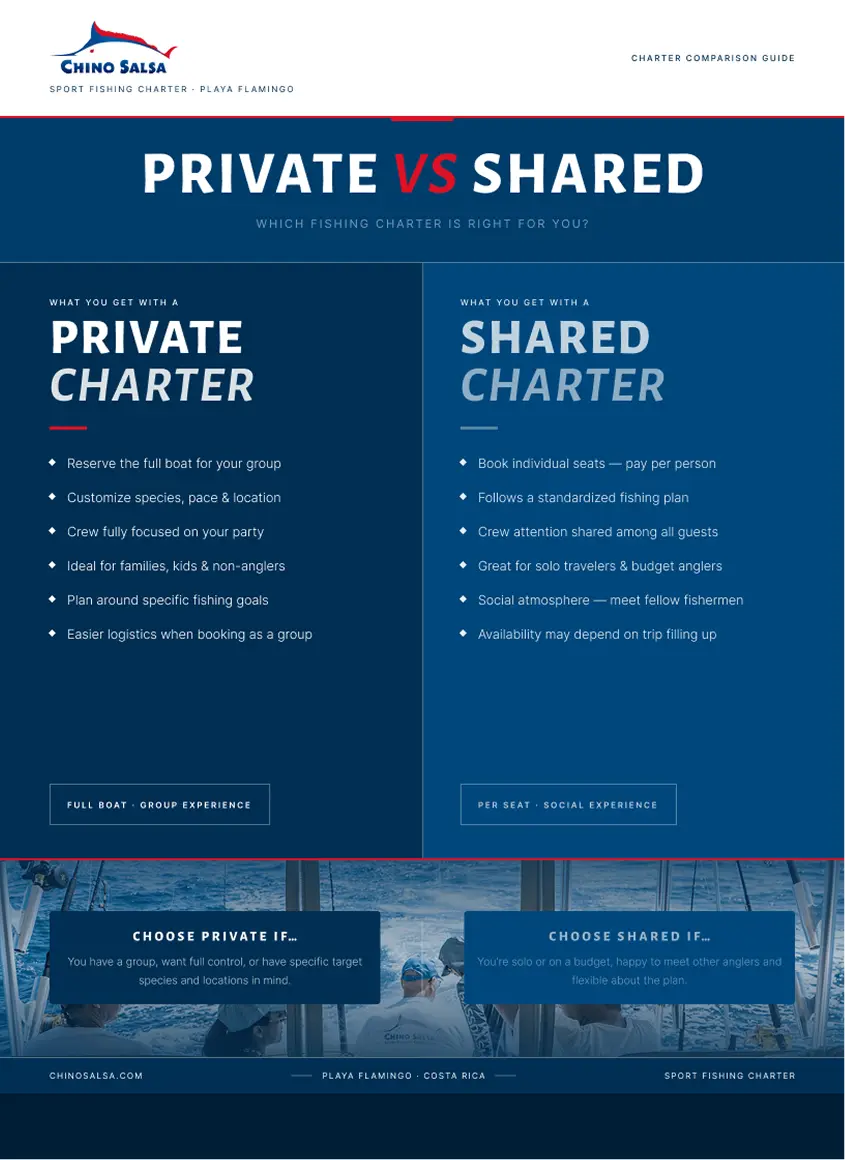
A private fishing charter means your group reserves the boat. You are not sharing the trip with unrelated guests, and the captain and crew can focus on your group’s goals, comfort level, and pace.
This option is usually best for families, groups of friends, couples celebrating a special occasion, corporate guests, serious anglers, and travelers who want a more flexible day on the water
Shared Fishing Charters
A shared fishing charter means you book individual seats or spots on a boat with other guests. This can be a practical option if you are traveling alone or as a couple and want a lower-cost way to join a fishing trip.
The trade-off is that the route, pace, crew attention, and onboard atmosphere are shared with other people. Shared trips can be enjoyable and social, but they usually offer less privacy and less control over the day.
Half-Day, 3/4-Day, and Full-Day Charters
Fishing charters are also commonly offered by duration.
A half-day charter is usually a good fit for families, beginners, casual anglers, or travelers with limited time. It gives you a chance to enjoy the water without committing to a full day.
A 3/4-day charter gives you more time to fish while still keeping the day manageable. It is a strong middle option for groups that want more than a short outing but do not need a full-day trip.
A full-day charter is usually better for serious anglers or guests interested in offshore fishing. More time on the water can give the crew more room to reach deeper fishing grounds and adjust the plan based on conditions.
Inshore and Offshore Fishing Charters
Inshore fishing usually takes place closer to shore and can be a better fit for shorter trips, families, first-time anglers, and guests who prefer a more comfortable day on the water. Depending on the area and season, inshore trips may target species such as roosterfish, snapper, grouper, jacks, and other nearshore fish.
Offshore fishing usually involves traveling farther from shore and is often better suited for longer trips and guests with stronger sportfishing goals. Offshore trips may target species such as sailfish, marlin, yellowfin tuna, dorado, and wahoo, depending on the season and conditions. See Fishing Seasons in Costa Rica
Once you understand these basic charter types, the private vs. shared decision becomes easier to evaluate.
Private vs. Shared Charters
The difference between private and shared fishing charters becomes clearer when you look beyond the basic booking format. Price matters, but it is only one part of the decision. The right choice also depends on your group size, fishing goals, comfort level, privacy needs, and how much flexibility you want during the trip.
Cost and Value
Shared charters are usually priced per person. You book one or more seats and share the boat with other guests. This can be a practical option if you are traveling alone or as a couple because you only pay for your own spots.
Private charters are usually priced for the boat. The upfront cost is higher, but your group gets the full vessel, crew, space, and experience to yourselves. Once that cost is divided among a family or group, the value can become much stronger.
This is where price alone can be misleading. A shared charter may look cheaper at first, but it also means sharing the schedule, crew attention, rod time, and onboard space. A private charter may cost more upfront, but you are also paying for privacy, comfort, flexibility, and a trip built around your group.
The better question is not simply, “Which option is cheaper?” It is, “Which option gives your group the better day on the water?”
Fishing Goals and Customization
Playa Flamingo offers access to both inshore and offshore fishing, so your goals matter when choosing a charter. Some guests want a relaxed half-day trip close to shore. Others want a more focused offshore trip targeting larger sportfish.
On a shared charter, the captain and crew need to consider everyone onboard. That usually means the trip follows a more general plan. The route, pace, fishing style, and level of instruction need to work for multiple guests with different expectations.
On a private charter, the experience can be shaped more closely around your group. If you want to focus on a certain style of fishing, target specific species, slow the pace for beginners, or spend more time offshore, it is easier to discuss those goals with the captain and crew.
A private charter does not guarantee more fish. No fishing trip can promise that. But it does give the crew more room t
Privacy, Comfort, and Group Experience
The social side of a fishing charter is easy to overlook until you are already onboard.
Shared charters can be fun if you enjoy meeting other anglers. They can create a social atmosphere, especially for solo travelers or couples who are comfortable joining a group. But the experience also depends on who else is on the boat.
Private and shared fishing charters can both get you on the water, but the experience is different. The best choice depends on how many people are in your group, how much flexibility you want, and whether you prefer a private experience or a more social trip.
A private charter keeps the day within your group. You can relax, talk, celebrate catches, take photos, and enjoy the trip without adjusting to strangers. This matters for families, couples, friend groups, corporate guests, and anyone planning a special occasion.
Comfort also matters more than many people expect. Shade, seating, bathroom access, air conditioned cabins, and room to move can make a major difference, especially if you have children, older guests, first-time anglers, or non-fishing guests in your group.
Shared charters can be a good fishing trip. Private charters are often a better group experience.
Control, Flexibility, and Time
Shared charters naturally require more compromise. The captain and crew need to balance multiple guests, different skill levels, different expectations, and shared fishing time. If the group has different ideas about pace or fishing style, the trip usually has to stay more general.
Private charters are centered around one group. That makes it easier to adjust the pace, take breaks, move locations, focus on a certain fishing style, or spend more time where the action is. The crew can also spend more focused time helping your group instead of dividing attention across unrelated guests.
This does not mean private charters create more hours in the day. But they often make the time feel more focused because the trip is built around one group rather than several.
For serious anglers, that flexibility can be important. For families and vacation groups, it can make the day feel smoother, easier, and more relaxed.
Skill Level and Guest Experience
Different experience levels can affect the charter experience.
On a shared charter, the captain and crew usually need to support a general skill level. The group may include first-time anglers, casual guests, and experienced fishers. Beginners may feel less comfortable asking basic questions in front of people they do not know. Experienced anglers may want more specific strategy than a shared trip can provide.
On a private charter, the crew can adjust to your group’s actual skill level. If your group is new to fishing, the crew can take more time with instruction. If your group is experienced, the conversation can focus more on fishing strategy, target species, and technique. If your group includes both beginners and serious anglers, the crew can balance the day more naturally.
This is one reason private charters often work better for families, mixed groups, and guests who want the experience to feel comfortable from start to finish.
Best Option by Group Type
The right charter type depends heavily on who you are traveling with. A solo traveler, a family with kids, and a group of serious anglers will not always need the same experience.
Solo Travelers
If you are traveling alone, a shared charter may be the most practical option. You can book a seat, join other guests, and get on the water without paying for the full boat. It is usually the easier choice if your main priority is cost.
That said, solo travelers who want a fully personalized fishing day may still prefer a private charter, especially if they have specific fishing goals.The right charter type depends heavily on who you are traveling with. A solo traveler, a family with kids, and a group of serious anglers will not always need the same experience.
Couples
For couples, the better option depends on the purpose of the trip.
If you are mainly trying to keep the cost lower, a shared charter can work well. You still get the fishing experience without reserving the full boat.
If the trip is part of a honeymoon, anniversary, birthday, proposal, or special vacation moment, a private charter is usually the better fit. It gives you more privacy, more flexibility, and a more personal experience on the
Families With Kids
For families, private charters are usually the stronger choice. Children may need breaks, snacks, shade, bathroom access, or a slower pace. A private charter gives your family more control over the rhythm of the day.
It also creates a more relaxed environment. Parents do not have to worry as much about other guests onboard, and the crew can adjust the experience to the family’s comfort level.
Friend Groups
For groups of friends, a private charter usually makes more sense. The trip becomes part of the group experience, not just a fishing activity.
You can talk, laugh, take photos, celebrate catches, and enjoy the day without sharing the boat with people outside your group. This makes the experience feel more natural and memorable.
Corporate or Client Groups
If you are hosting clients, colleagues, or a corporate group, a private charter is usually the better option. It gives the day a more polished and controlled feel.
Privacy matters in this setting. A private charter allows the group to relax, talk, and enjoy the experience without outside guests affecting the atmosphere.
Serious Anglers
Serious anglers often benefit from booking private. If you have specific fishing goals, target species, techniques, or preferred fishing styles, a private charter gives you more room to discuss those details with the captain and crew.
Shared charters can still produce a good fishing day, but they usually need to follow a more general plan that works for everyone onboard.
Mixed-Experience Groups
If your group includes both beginners and experienced anglers, private is usually the better fit. Beginners may need more instruction and patience, while experienced anglers may want more focused fishing time.
A private charter gives the crew more flexibility to support both types of guests without having to balance unrelated people onboard.
Groups With Non-Fishing Guests
Not everyone on a fishing charter wants to fish the entire time. Some guests may simply want to enjoy the ocean views, relax, take photos, or spend time with the group.
In that case, a private charter usually provides a better overall experience. It gives non-fishing guests more space, comfort, and freedom to enjoy the day without feeling like they are interrupting other anglers
When Shared Makes Sense vs. When Private Is Better
Both private and shared fishing charters have their place. The right choice depends on your group size, budget, comfort level, and how much control you want over the day. Use this decision table to clarify which option fits your situation:Not everyone on a fishing charter wants to fish the entire time. Some guests may simply want to enjoy the ocean views, relax, take photos, or spend time with the group.
In that case, a private charter usually provides a better overall experience. It gives non-fishing guests more space, comfort, and freedom to enjoy the day without feeling like they are interrupting other anglers
OPTION A
Choose a Shared Charter If... |
OPTION B
Choose a Private Charter If... |
|---|---|
|
|
|
|
|
|
|
|
|
|
|
|
|
|
|
|
|
|
Shared charters are usually best when you want a lower-cost way to join a fishing trip. Private charters are usually better when you want privacy, flexibility, comfort, and a day built around your group
A Simple Rule of Thumb
If you are choosing mainly by price and only need one or two spots, a shared charter may be the practical choice.
If you are choosing based on the full experience, especially for a family, group, celebration, or serious fishing day, a private charter is usually the better fit.
The easiest way to decide is to ask one question:
Do you want to join a fishing trip, or do you want the fishing trip built around your group?
If you simply want to join a trip, shared can work. If you want privacy, comfort, flexibility, and control over the day, private is the stronger option.
Questions to Ask Before Booking
Before you book a fishing charter in Playa Flamingo, ask a few practical questions. The answers can help you avoid choosing a trip that does not match your group, comfort level, or expectations.
Is the trip private or shared?
Do not assume this from the listing alone. Confirm whether your group is reserving the full boat or booking individual seats with other guests.
How many guests can join?
Every boat has a maximum capacity. If you are traveling with family or a group, confirm how many guests can come onboard and whether that number refers to total passengers or active anglers
What is included in the price?
Ask whether rods, reels, bait, tackle, lures, drinks, snacks, lunch, fishing licenses, and crew service are included. Inclusions vary by operator and trip length.
Is transportation available?
Some charters may offer pickup or help arrange transportation, while others expect guests to meet directly at the marina or departure point. Confirm this before booking.
What happens if weather or sea conditions change?
Fishing trips depend on safe ocean conditions. Ask about the operator’s weather policy, rescheduling options, and cancellation terms.
What species are commonly targeted during the season?
Fishing in Playa Flamingo can be productive throughout the year, but target species may vary by season, conditions, and trip style. Ask what is commonly targeted during your travel dates.
What is the catch policy?
Ask what happens if you catch edible fish and whether the crew can clean or prepare it. For billfish such as sailfish and marlin, many Costa Rica sportfishing trips follow catch-and-release practices, so confirm the policy before booking.
Is the boat suitable for kids or non-fishing guests?
If your group includes children, older guests, or people who may not fish the whole time, ask about shade, seating, bathroom access, cabin space, and general comfort onboard.
Can the trip be adjusted for beginners or mixed skill levels?
The best fishing charter is not simply the cheapest one. It is the one that fits your group, your goals, and the kind of day you want to remember.
Shared fishing charters can be a practical way to get on the water, especially if you are traveling solo, booking as a budget-focused couple, or open to meeting other anglers. They offer a lower entry point and a more standard group experience.
Private fishing charters are usually the stronger choice when the full experience matters. If you are traveling with family, friends, clients, or a group, private gives you more privacy, comfort, flexibility, and control over the day.
In Playa Flamingo, where fishing can be part of a larger Costa Rica vacation, that difference matters. You are not only choosing how to fish. You are choosing how your group spends time together on the water.If your group includes children, older guests, or people who may not fish the whole time, ask about shade, seating, bathroom access, cabin space, and general comfort onboard.
About Chino Salsa
Chino Salsa offers private fishing charters from Playa Flamingo, Costa Rica, for guests who want a more personal and comfortable day on the water.
The charter operates aboard a 37’ Ocean Yacht Billfish, with space for up to 10 people. This makes it a strong fit for families, friend groups, couples, corporate guests, and travelers who want to enjoy the boat with their own group.
Because the experience is private, the day can be shaped around your group’s pace, comfort level, and fishing goals. Whether you are planning a serious sportfishing trip, a family outing, or a memorable day on Costa Rica’s Pacific coast, Chino Salsa gives your group the space and flexibility to enjoy the experience together.
If you are looking for a private fishing charter in Playa Flamingo, Chino Salsa provides a comfortable, group-friendly way to get out on the water with a dedicated captain and crew.
Costa Rica Fishing: The Complete Guide for 2026
Costa Rica has earned its reputation as one of the most sought-after fishing destinations, and it’s not by accident. Situated between the Pacific Ocean and the Caribbean Sea, this small country offers something only a few places on earth can offer: warm waters, rich marine life and a year-round fishing ground right off the coast. Add that to the natural scenery, pro fishing culture, importance on sustainability, and deep respect for the ocean, and you start to understand why anglers from around the world keep coming back to this tropical piece of paradise.
Fishing in Costa Rica is exciting, unpredictable in the best way, and deeply rewarding. While no fishing trip in the world can ever guarantee a catch, Costa Rica comes impressively close, with consistent action and rare skunk days (days when no fish are caught). From trophy species offshore, to some of the most unique inshore species, there is something special on the water every day. In this guide, you’ll find everything you need to know to plan a successful and enjoyable fishing trip in Costa Rica. It’s made for travellers planning a trip to Costa Rica and looking for exciting things to do on the water and experience the country through adventure, nature and local culture. It’s also suitable for new and experienced anglers who understand the thrill of the chase and are planning to make Costa Rica their next sport fishing destination.
What Makes Costa Rica a Sport Fishing Paradise for Anglers Worldwide
Costa Rica isn’t just a great place to fish, it’s one of the most consistent and diverse sportfishing destinations on the planet. What sets it apart is the rare combination of geography, water conditions and a fishing culture that only a few countries can match.
The deep ocean drop-offs are located surprisingly close to the shore, so anglers can get to productive fishing action without having to travel too far. The nutrient rich currents created by a mix of deep-water upwellings, ocean currents, and seasonal winds moving through Costa Rica fuels plankton growth, attracting baitfish all year round, which in turn draws in some of the world’s most prized game fish such as sailfish, marlin, yellowfin tuna, dorado (mahi-mahi), and the iconic roosterfish.
Beyond the fishing itself, Costa Rica has built a strong reputation for professionalism and conservation. Catch-and-release practices are widely respected for protected species like the billfish, helping preserve healthy fish populations for the future generations.Many captains and crews are Costa Rican locals who grew up on these waters, combining decades of experience with a deep respect for the ocean and its ecosystems.
Add in the calm waters along the Pacific coast, modern marinas, and infrastructure built to cater high-end travellers and anglers alike, Costa Rica ranks consistently among the world’s top sport fishing destinations.
Top Fishing Regions in Costa Rica (And How to Choose the Right One)
The Costa Rican coastline offers a wide range of fishing environments, each with its own character, target species, and overall experience. Choosing the right location for your fishing trip depends on what you’re looking for, the time of the year you’re visiting, and how central fishing is to your Costa Rica adventure.
The Pacific Coast- Costa Rica’s Sport Fishing Ground
Costa Rica’s sport fishing reputation truly shines in the Pacific Coast. With deep water close to the shore, this side of the country is known for consistent action, calmer conditions and excellent infrastructure and amenities for anglers.
- Northern Pacific: Ideal for travelers looking for calm seas, reliable fishing and relaxed, yet refined atmosphere. The Northern Pacific region is especially popular with families, experienced anglers, and travellers seeking high quality fishing, beautiful beaches and upscale accommodations.
- Central Pacific: Known for strong offshore fishing and a wide variety of pelagic species, this area attracts anglers focused on big game fishing and access to deep waters without long travel times from the coast.
- Southern Pacific: Relatively remote, but offers incredible biodiversity and potential for trophy fish. Best suited for serious anglers who prioritize fishing above all else and wouldn’t mind travelling a bit farther from the coast for a more rugged experience.
The Caribbean Coast: Seasonal and Weather-Dependent
The Caribbean coast offers excellent fishing opportunities during specific times of the year, particularly for anglers targeting tarpon and snook. Conditions here are more weather-dependent and fishing seasons are shorter compared to the Pacific, but when the bite is on, it can be outstanding.
How to Choose the Best Fishing Location for Your Costa Rica Fishing Trip?
When deciding where to fish in Costa Rica, consider the following:
- Your target species and preferred fishing style- Inshore/ Offshore
- The time of year you’re visiting
- Sea conditions, experience, and comfort level
- Proximity to accommodations and marinas
- Whether fishing is the main focus of your trip or part of a larger vacation
Each region offers something special and you can definitely find the best fit for your goals. With the right location and a knowledgeable local captain, Costa Rica delivers unforgettable fishing experiences no matter where you cast your line.
Seasonal Fishing Calendar: What You Can Catch & When
Fishing in Costa Rica is productive year round, with different species peaking at different times of the year. While there is always something biting, knowing what species are the most common during your travel will help set the right expectations and shape your fishing trip. For a detailed reading on the best fishing season in Costa Rica, check out this article.
Sailfish: Costa Rica is widely regarded as one of the best sailfish destinations in the world. Known for extreme speed and stunning aerial jumps, sailfish is a favourite for anglers looking for high-action offshore fishing.
Peak Season: December to April (Pacific Coast)
Why they’re special: Speed, acrobatics, and explosive strikes
Fishing style: Offshore
Sailfish
Marlin (Blue, Black, and Striped): One of the ultimate trophy fish in Costa Rica.
Peak Season: May to November (with year-round chances offshore)
Why they’re special: Size, power, and prestige
Fishing style: Offshore, full-day or multi-day trips
Blue Marlin
Yellowfin Tuna: Strong, fast, and incredibly fun to fight. They’re often found in large schools and are prized for their delicious sashimi-grade meat.
Peak Season: Year-round, with stronger numbers during certain months
Why they’re special: Power and consistent action
Fishing style: Offshore
Yellowfin Tuna
Dorado (Mahi-Mahi): Known for their vibrant colors and incredible fights, dorado are both fun to catch and delicious.
Peak Season: May to November
Why they’re special: Aggressive strikes (fast, powerful bites) and vibrant colors.
Fishing style: Offshore, often near floating debris
Dorado (Mahi-Mahi)
Roosterfish: An iconic inshore species and a bucket-list catch for many anglers.
Peak Season: Year-round, with strong presence during warmer months
Why they’re special: Powerful bites and unique appearance
Fishing style: Inshore fishing near rocky coastlines
Roosterfish
Snapper, Grouper, and Other Inshore Species: Popular for anglers who enjoy variety and looking for action closer to shore. These species are often targeted on half-day trips and are ideal for families or mixed-experience groups.
Peak season: Year-round
Why they’re special: Known for strong fights and excellent eating quality, when fishing regulations allow keeping them
Fishing style: Inshore and nearshore
Snapper
Grouper
Types of Fishing Trips in Costa Rica
Costa Rica offers great flexibility when it comes to planning a fishing trip. Whether you are looking for a relaxed introduction to fishing or a full-on deep sea fishing adventure, you are sure to find something that matches your goals, schedule, and experience level. Here are a few types of fishing trips commonly offered in Costa Rica.
Half-Day Fishing Trips: Great option for travellers who are short on time or just want to experience fishing in Costa Rica without a full day commitment. Best for first time anglers, families and travellers with limited time. Expect a mix of inshore and nearshore fishing, calmer waters and a relaxed pace. Ideal for targeting species like roosterfish, snapper and other coastal fish.
Full-Day Fishing Charters: Full day fishing charters offer the most complete Costa Rica fishing experience. It’s a preferred choice for experienced anglers and tourists wanting an authentic full-day fishing experience. Expect early morning departures, offshore fishing and a lot of time in productive waters. Suitable for targeting species like sailfish, tuna, dorado and other in deep, open ocean.
Multi-Day Fishing Adventures: Multi-day fishing trips are for anglers who want to completely immerse themselves in the Costa Rican fishing experience. Best for passionate anglers and groups focused primarily on fishing. Expect fishing multiple days in a row, using various fishing techniques, and fishing different locations based on conditions. Suitable for a strategic approach to target specific species over several days.
All-Inclusive “Stay & Play” Fishing Packages: The all inclusive fishing packages combine fishing adventure with accommodations and logistics for a seamless Costa Rica fishing experience. It is ideal for families, groups and international travellers who want to focus on fishing and relaxation, while travelling stress free. Expect lodging near popular marinas paired with fishing charters, transportation and personalized planning. Ideal for travellers who want everything handled for them while enjoying premium fishing and comfort.
No matter what package you choose, the key is to match it with your goals and travel plans. A knowledgeable local charter can help guide that decision and ensure your fishing experience in Costa Rica is both enjoyable and memorable.
How to Choose the Right Fishing Charter in Costa Rica
When planning your Costa Rica fishing trip, booking a fishing charter is the standard and most reliable option. A charter gives you access to experienced local captains, professional crew and fully equipped boats designed specifically for sport fishing, providing you the safest, most efficient and productive way to experience a fishing trip. Local captains are aware of seasonal patterns, feeding areas and different conditions giving you the best chance of action during your trip. It removes the uncertainty to a huge degree and allows you to focus on enjoying the day, learning and fishing with confidence. Most of the premium charters will also provide snacks, beers, and meals with additional services like video of your catch, pick-ups, and other add ons. In addition to providing a smoother experience, charters also ensure compliance with fishing regulations, and conservation practices which is an important part of Costa rica fishing culture.
That said, not all fishing charters are the same, and choosing the right fishing charter for your trip can feel overwhelming, especially when you are new to fishing. Here are a few things to keep in mind when selecting a charter in Costa rica
- Experience and reputation of the captain and crew. Take time to read about the captain and crew on the charter’s website. Look for local experience, knowledge of the area, and bilingual communication, which can be a big difference in your overall experience.
- Type of fishing trips offered. Check for the types of fishing trips offered and if it watches your schedule, experience level and goals. Most common types of fishing trips offered in Costa Rica are Half day, full day and multiday trips, so you are sure to find something that will suit your needs.
- Type and size of the boat. Consider the number of people in your group, the length of your fishing trip and type of fishing you want to do — offshore or inshore, when deciding on the right boat for your trip.
- Boat condition, safety and onboard comfort. Well-maintained boats, proper safety equipment, and comfortable seating matter, especially on longer trips. Check with the charter company if they offer a virtual tour to the boat before booking.
- Clear communication about what’s included and what’s not. Ask about any additional services offered by the charter company like video recording of your catch, transportation, food and drinks, or any other extras you may want.
Where to Stay When Fishing Is the Focus of Your Trip
When fishing is a central part of your Costa Rica vacation, the location you choose for your stay matters more than many travellers realize. Proximity to the water, marina access, and early morning logistics can all have a big impact on how smooth and enjoyable your fishing experience will be. While there are plenty of great accommodation options across the country, a few practical considerations can help you narrow things down.
Resorts: Great for travellers who want comfort, amenities and a relaxed vacation feel. Many resorts are accustomed to hosting anglers and can easily coordinate early departures and transportation.
Hotels near marinas: Popular with families and groups, offering flexibility, space, and easy access to boats. It’s a practical and best choice for anglers or tourists who want to waste less time while staying close to the action, especially for full-day or multi-day trips. Most high-end marinas in Costa Rica offer access to shops, restaurants and other amenities, so everything is usually within walking distance. You can also expect local events at the marina, giving you a chance to experience the local culture as well.
Boutique hotels: Ideal for couples or small groups looking for a more local, personalized experience while still staying near key fishing areas.
Choosing the ideal place to stay will depend on your budget, availability and your overall itinerary. However, here are some key things to consider when picking a place to stay for your fishing trip:
- Distance from the marina or pickup point: Fishing days often start early in the morning, so staying closer to where your boat departs can save time and energy. It will give you more time and rest before and after a long time on the water.
- Early-morning logistics: Comfortable accommodations, reliable transportation and easy morning access matters more than luxury alone when you’re heading out before sunrise.
- Comfort after a long day on the water: Air conditioning, good beds, accessibility to nearby shops and restaurants could go a long way after a full day on the water.
- Flexibility for fishing schedules: Weather and sea conditions can shift plans. Staying somewhere with flexible check-in times or nearby dining options can make things easier.
Most premium fishing charter companies in Costa Rica offer pickup and drop off services from your place of stay or the airport to the marina. When booking your trip, it’s always worth asking whether transportation is available, especially if you’re not staying close to the marina.
Fishing Licenses, Rules & Conservation in Costa Rica
Fishing in Costa Rica is more than just the catch. Respecting the ocean, marine life and future generations of anglers is deeply ingrained in the local fishing community. Ethical practices, proper handling and responsible decision making help ensure that the ocean remains productive and exciting for years to come.
Understanding the basics of the local fishing regulations before heading out ensures you have a smooth and a responsible experience on the water. The good news is that for most of the visitors, this process is simple as everything is usually taken care of by the charter companies.
Would you need a fishing license?
Anyone fishing in Costa Rica is required to have a valid fishing license. This is usually taken care of by the fishing charter company. It’s always a good idea to confirm this when making your booking. Most reputable charter companies will:
- Arrange the required fishing licences for you and your group in advance.
- Ensure all guests are covered and compliant
- Handle all the paperwork so your experience is smooth and stress free.
Catch-and-Release and Fishing Regulations
Following the fishing regulations in Costa Rica isn’t just about compliance, it’s a part of fishing culture in Costa Rica. Certain species in Costa Rica, especially billfish like sailfish and marlin are strictly catch and release. This helps protect fish populations and maintain Costa Rica’s reputation as a world class fishing destination.
Depending on current regulations and size limits, your captain and crew will guide you on which fishes can be kept, which must be released and how to handle the fish properly to ensure survival.
Planning Tips for a Successful Costa Rica Fishing Trip
A few simple considerations to keep in mind before booking your fishing trip can make a big difference in your overall experience. Costa Rica fishing is accessible, organized, but thoughtful preparation from your end will help you align expectations and ensure you get the most of your time on the water.
- Book ahead, especially in peak seasons: Prime fishing months in Costa Rica can fill up quickly, especially with reputable charter companies. Booking in advance gives you a better availability, more flexibility and access to preferred boats and trip types
- Be flexible with timing and conditions: Costa rica fishing is influenced by weather, sea conditions and fish movement. Trusting your captain’s recommendations, whether it’s departure time, location or fishing style, often leads to the best results.
- Pack Light (most things are included): Most of the fishing gear and equipment will be provided to you by the charter. However, you must pack: Sun protection, light clothing, motion sickness medication if needed, a camera, and some excitement.
- Set the right expectations: Every day on the ocean is different. The goal isn’t just the catch, it’s the full experience—Time on the water, nature, wildlife and moments you’ll remember long after the trip ends.
- Choose experience over price: Choosing a charter based on the captain and crew’s experience, professionalism and local knowledge, rather than price alone will give you the best chance of having a rewarding experience.
Ready to Experience Costa Rica Fishing the Right Way?
When it comes to fishing in Costa Rica, who you fish with matters just as much as where and when. Chino Salsa operates out of Playa Flamingo on Costa Rica’s Pacific coast near Tamarindo, a location widely recognized for its access to productive fishing grounds and consistent offshore action. Fishing experiences with Chino Salsa are built around local knowledge, professionalism, and a genuine passion for the ocean.
Led by an experienced, bilingual Costa Rican captain, Chino Salsa specialises in full day fishing trips designed for anglers and families who value quality, safety and a productive day on the water. Whether you are an experienced fisherman chasing any specific species or a traveller looking to enjoy a premium fishing experience as part of your Costa Rica vacation, each trip is planned to match your goals and expectations. From handling licenses and regulations to providing top quality gear and local insight, everything is taken care of so you can focus on enjoying the experience stress free.
If you are planning a fishing trip in Costa Rica and want an experience that reflects the true spirit of sport fishing in Costa Rica, Chino Salsa is ready to help you plan a full-day adventure you’ll remember long after you’re back on shore.
Best Fishing Season In Costa Rica

Only a few locations around the globe rival Costa Rica when it comes to world-class sportfishing. With two spectacular coasts, warm tropical waters, and an awe-inspiring variety of marine life, this central American destination is a sportfishing paradise for both seasoned and first-time anglers coming here to experience some of the most thrilling fishing in the world. From sailfish and marlin to mahi-mahi and roosterfish, big game fishing opportunities never end in Costa Rica. However, what you catch, and where you should fish depends entirely on the season and the coast you choose.
This article explores the different fishing seasons across Costa Rica, the best times and regions to book your fishing charter, what weather and species to expect, and some tips from the crew at Chino Salsa to plan your fishing trip for the most rewarding experience.
Why Costa Rica is a Bucket-List Fishing Destination
Costa Rica is one of the world’s premier sportfishing destinations for every kind of angler, and that’s not because of luck. It’s geography, climate, and conservation coming together in perfect balance. With the Pacific Ocean on the west and the Caribbean Sea on the east, the country offers access to two entirely different marine ecosystems within a few hours of drive. Each coast is rich with marine life, featuring warm waters that attract migratory pelagic species all year-round.
On the Pacific side, the deep offshore waters are home to some of the legendary big-game fishes like sailfish, marlin, yellowfin tuna, wahoo, and dorado. Inshore, there is roosterfish, snapper, grouper, and amberjack, perfect for those who enjoy fishing near the coast while enjoying the scenic views of the rugged coastline. On this side of the coast, runs are typically short from major marinas and beach launches, so you spend more of your day fishing and less of it riding. Add easy air access (SJO and LIR), modern marinas, seasoned bilingual crews, and strong conservation practices, and you’ve got a destination that’s welcoming for first-timers, exciting for veterans, and endlessly repeatable.
The Caribbean coast, although less developed, offers equal excitement but a completely different experience. The fresh water from the powerful rivers in the north, like the Río San Juan, Río Colorado, and Tortuguero, flows through the dense rainforest of Costa Rica, picking up nutrients, creates a nutrient-rich mix of fresh and saltwater that attracts large, predatory fish like tarpon, snook, and jack crevalle. Fishing here often happens in the tranquility of the lagoons or river mouths, surrounded by lush jungle and incredible wildlife.

Best Fishing Season In Costa Rica
Best Times & Species Across Costa Rica (Seasonal Breakdown):
December – April (Pacific Dry Season; Caribbean Breezy)
This is the easiest time of year to plan a fishing trip on the Pacific side. Mornings are usually clear, seas are calmer, and favourable for offshore trips. Great time for beginners and families.
Best Region: The North Pacific Coast around Papagayo, Playas del Coco, Playa Flamingo, Tamarindo, and Nosara/Sámara enjoys excellent conditions in this window.
Weather: This is the classic “dry season” in Guanacaste. Expect sunny days, calm seas, minimal rain, and excellent visibility. Sea conditions are generally favorable for offshore trips.
Fishes you can catch during Costa Rica Dry Season:
- Sailfish
- Marlin (blue, black, striped)
- Yellowfin tuna
- Mahi-mahi (dorado)
- Roosterfish and inshore species
How long to book the charter:
Full Day Fishing Trip: Book a full day 8-10 hours fishing trip to cover more ground and catch some big-game fish.
¾ Day Fishing Trip: Booking a 6 hour fishing trip is a viable option, especially if the sea conditions seem unpredictable.
Special Notes:
- Consider booking an early morning charter as afternoon showers become more common.
- It is very important to book an experienced charter during this season. Your local captain may target floating weeds or trash lines for mahi-mahi as the debris and run-off from rivers draws game fish.
Suggestion for planning:
Before you book your charter, ask your captain if they plan to fish along floating debris lines (known as “weed lines”), since these often attract mahi-mahi and other species. Carry a light rain jacket and aim for an early morning start to make the most of the calm conditions.
August – November (Green / Wet Season)
During this time, the country turns lush and the ocean is filled with life. Some days will be incredible for fishing, while others may bring strong winds, showers and unpredictable seas. However, this naturally brings strong opportunities for big game action and less crowds. Well-seasoned captains like Captain Gerardo, aka “Comie”, who are familiar with the “green season” would know how to navigate the conditions.
Best Region: The North Pacific region near Playa Flamingo, Tamarindo, and Papagayo remains excellent for fishing during this season, especially for certain species.
Weather: This time of the year brings most of the rain in Costa Rica. Expect frequent rains in the afternoons, with sea conditions often challenging due to wind, swells, and low visibility.
Fishes you can catch during Costa Rica Green / Wet Season:
- Marlin (especially blue and black)
- Yellowfin tuna
- Mahi-mahi/dorado
- Roosterfish, snapper and other inshore species
How long to book the charter:
Full Day Fishing Trip: For the best shot at catching a trophy offshore fish, book a full day 8-10 hours fishing trip to cover more ground.
¾ Day Fishing Trip: If you prefer a safer, shorter outing, booking a 6 hour fishing trip is a viable option, especially if the sea conditions seem unpredictable.
Special Notes:
- Since the seas may be rougher during this period, choose a stable fishing charter boat with a well-seasoned crew and local captain.
- Consider scheduling your trip early in the morning as afternoons are less reliable.
- Check the weather/cancellation policy ahead of time.
Suggestion for planning:
Carry rain protection, non-slip footwear, and possibly seasickness prevention if you are sensitive. Choose a deep sea or nearshore fishing experience based on your experience and comfort level.
Tips to Pick the Best Fishing Time for Yourself:
- If you want the most suitable and easiest weather conditions with great big-game opportunity, plan your fishing charter for anytime between December and April
- If you’re flexible and want high chances for mahi-mahi and tuna at slightly lower cost, consider May-July.
- If you’re adventurous, comfortable with variable conditions, and want strong big-game chances with fewer crowds, go for August to November.
- Make sure to choose charter length appropriate for your target species and sea conditions (full day to maximize your chances for a trophy catch, ¾ or half day for inshore/family).

Quick Species-by-Season Cheat Sheet
- Sailfish: Peak December to April in the Pacific; present in smaller numbers in other months.
- Blue/Black Marlin: Best May to November, with notable spikes in September and November on Pacific seamount/edge plays; still possible December to April.
- Dorado (Mahi): Excellent June to December, often peaking in September and November with debris/weed-lines.
- Yellowfin Tuna: Year-round; dependable May to November, but pods can show in any month.
- Wahoo: More frequent May to August around structure and temperature breaks.
- Roosterfish: Year-round inshore Pacific; especially lively May to October.
- Cubera Snapper/Grouper: Year-round on reefs/rocks; calmer mornings help.
- Tarpon (Caribbean): Best in September and October during the calm window; still good in May to July and November in the right conditions.
- Snook (Caribbean & select Pacific rivermouths): Strong around river mouths on tide/clarity swings, with local peaks in the green season.